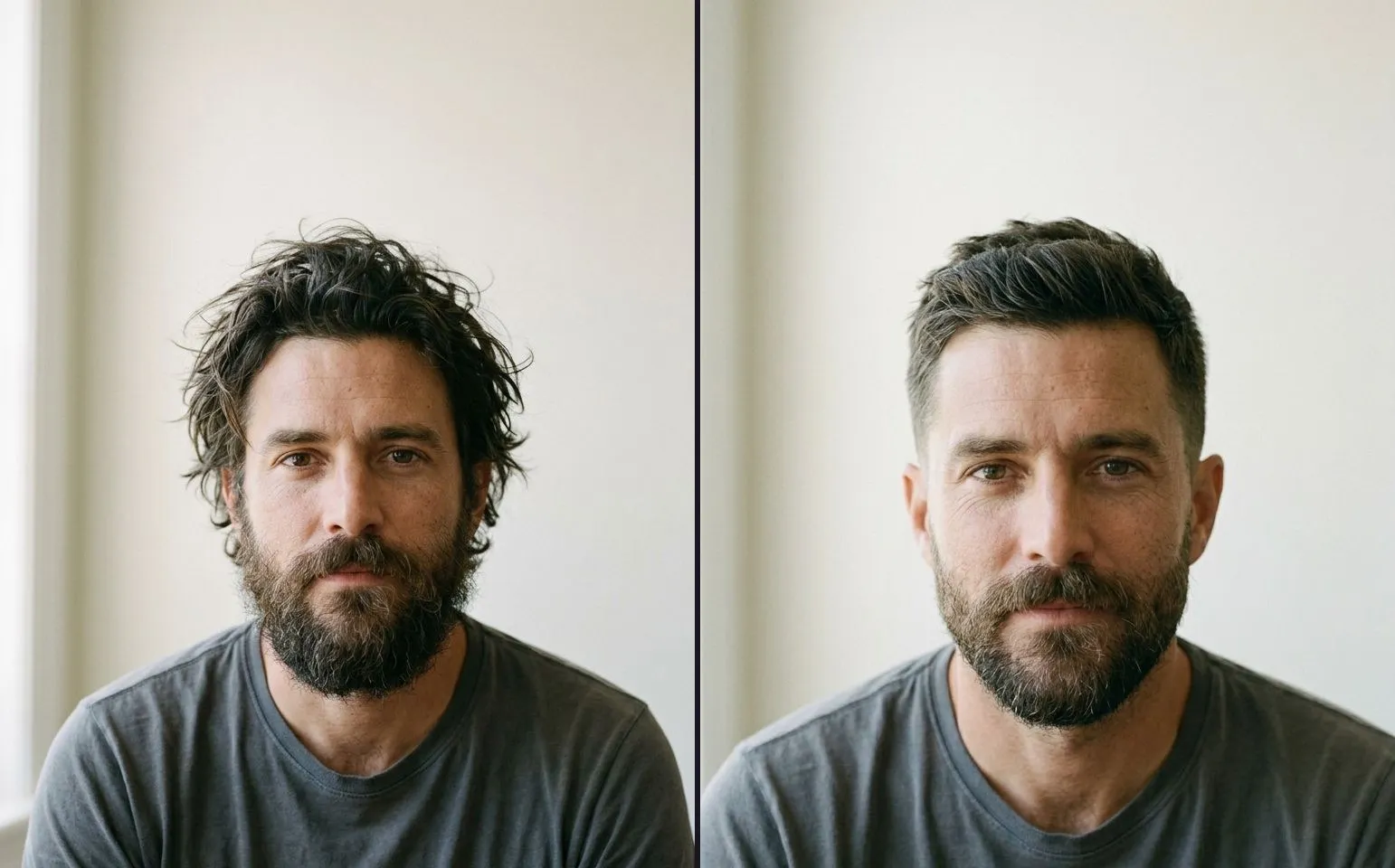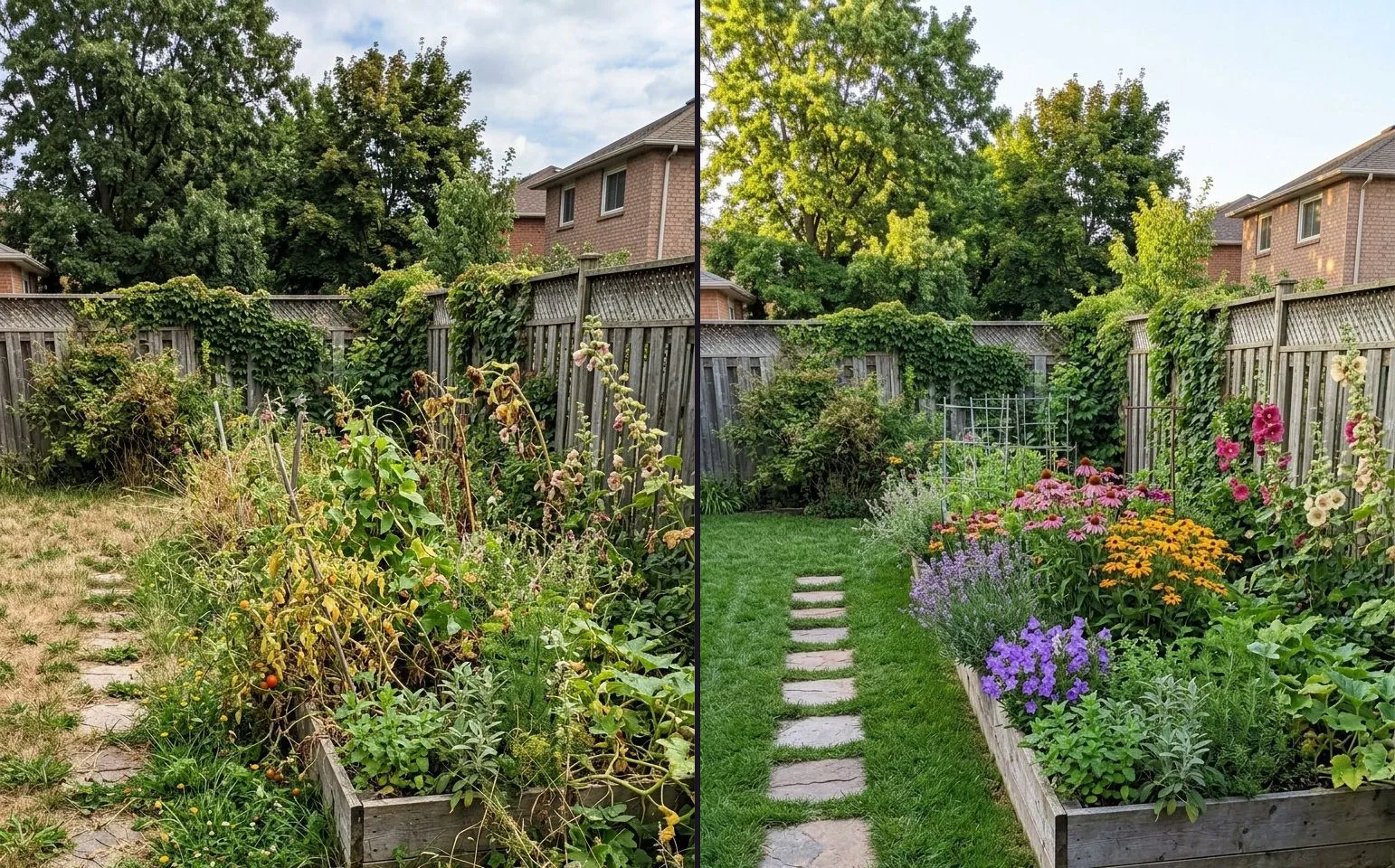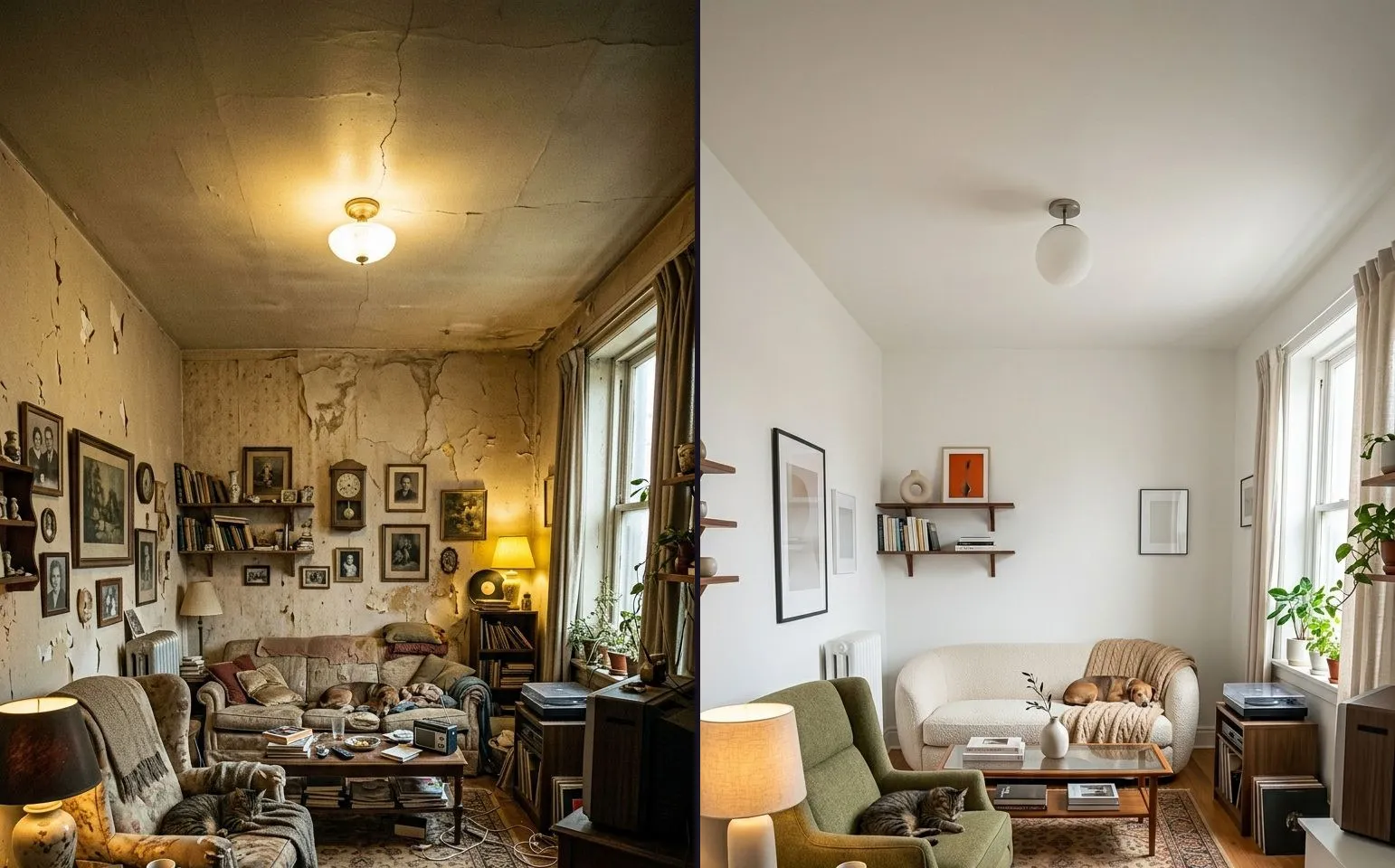
When to Take the Before Photo (Before You Start, Not After)
The before is a habit fixed to the start of the job, not a photo you remember once the after already looks good. Here is the three-frame arrival set, and what to do when it did not happen.
You are halfway through unloading the van when you remember the before photo. The dust sheet is already down, a tool is already out, and the room no longer looks the way it did when you walked in. You take the photo anyway, because something is better than nothing, and it is a worse photo than it should have been, for a reason that had nothing to do with your camera.
This happens on almost every trade job at some point, and it is not a camera problem or a skill problem. It is a sequencing problem. The before photograph has to happen at a specific point in the job, and once that point passes, no amount of editing gets it back.
The one rule that fixes it
The before is taken before the van is unloaded.
Not after you have assessed the job. Not after you have said hello properly and had a look around. Before. The instant you are standing in front of the space or the object and nothing about it has changed yet, that is the frame, and it lasts for however long it takes you to find your camera and open it.
This sounds almost too simple to be a rule, and that is exactly why it works. It does not depend on remembering to take a good photo, composing it carefully, or noticing that this particular job might be worth posting. It depends on one thing happening at one fixed point, every time, regardless of how the job goes. The job you think is unremarkable on arrival is sometimes the one with the best after. You cannot tell that yet, which is the whole reason the rule has no exceptions.
Make it nobody’s specific job
Assign the before photo to a person and it gets missed the day that person calls in sick, swaps vans, or is two minutes behind the rest of the crew. Assign it to a moment instead, and it survives every roster change you will ever make.
The moment is arrival. Whoever is first through the door, first out of the van, first into the room, takes the photo. It is not a responsibility that belongs to the most senior person on the job or the one who posts the socials. It belongs to whoever gets there first, which means on any given day it could be any of you, and that is the point. A habit tied to a role breaks when the role is absent. A habit tied to a moment does not care who is standing in it.
The three-frame arrival set
One photo is a gamble, because you do not yet know what the job will need to prove. Three photos, taken in the same ten seconds, cover you whichever way the after turns out.
- Wide. The whole room, the whole driveway, the whole vehicle, the whole garden. This is the frame that shows scale, and scale is usually the part a close-up throws away.
- Working distance. The frame you will most likely match later, shot from roughly where you will stand to do the job. This is the one that becomes your actual before and after pair, so it is worth a second or two of care: level the phone, fill the frame sensibly, check nothing important is cut off at the edge.
- The worst detail. The stain, the crack, the tangle, the thing that is actually the reason you were called. Close enough that nobody can argue about what it shows.
Ten seconds, three photographs, and you have not yet decided which one is the pair. That decision happens later, once you can see what the after actually looks like and which before frame it lines up against. How to take matching before and after photos covers the spot, height, distance, lens and light worth fixing once you have settled on which of the three frames you are going to match.
Every job, including the ones you will not post
The habit only holds if it applies to every job, not just the ones that look promising on arrival. This is the part that takes the most discipline, because a routine service call does not feel like it deserves a photograph, and most of the time you will be right.
Take it anyway. You cannot tell from the doorway which job turns into the post that actually performs, which job turns into a dispute about what the property looked like when you arrived, and which job turns into a client asking in October for “that photo you took in March” that you did not take. The arrival photo is cheap insurance against all three, and it is cheap precisely because you take it without thinking about which one applies this time.
If a job genuinely does not warrant three frames, take the working-distance one and move on. The floor is one photograph, every job, no exceptions. Anything above that floor is a judgement call you can make once you are inside.
What to do when it did not happen
It will not happen sometimes. A job starts before you are ready for it, a callout is urgent enough that the photo genuinely is not the priority, or you simply forget. When that happens, the honest move is to post the after on its own and say so in the caption. “No before on this one, came out swinging on an emergency call” costs you nothing. People understand that some jobs do not leave room for a photograph.
What costs you is the other option: borrowing a similar-looking before from another job, or staging one after the fact with the work half-undone. A viewer cannot tell the difference between a genuine before and a staged one from the photo alone, which is exactly why it is tempting and exactly why it is a mistake. The moment anyone works it out, and on a recurring feed somebody eventually does, they stop trusting every before and after you have ever posted, not just the one that was faked. Why your before and afters look fake covers the seven tells in detail, and a fabricated before is the one that reads as dishonest rather than careless, which is a worse place to be.
An after with no before is a missed opportunity. An after with a fake before is a liability. Choose the missed opportunity.
Building it into the day, not into your memory
The reason this fails is almost never that people do not understand the rule. It is that remembering a new habit on a busy morning is genuinely hard, and a habit that depends on memory under time pressure loses to time pressure eventually.
The fix is to attach the photo to something that already happens every job, so it stops being a separate thing to remember. Some crews tie it to stepping out of the van. Some tie it to the first word spoken to the client, on the logic that you cannot greet someone without having already looked at the space you are standing in. Whatever the anchor, pick one thing that happens on literally every job and hang the camera habit off it, rather than off a checklist nobody reads at 7am.
Once you have the frame, where it lives matters almost as much as taking it. A before photo with no record of which job it belongs to is nearly as useless as no photo, which is the filing problem covered separately once a crew is shooting more than a couple of jobs a week.
What this buys you over time
None of this is about any single post. It is about never again standing in a finished room wishing you had thirty seconds back. A trade business that takes the arrival set on every job builds up a library it did not have to think hard about, and the posts that come out of it stop depending on remembering to be ready.
When you do have a matched pair worth turning into something, our app takes the two still photographs and gives you back a video, a GIF or a single image. There is no clip import and no timeline in it, a photo pair goes in and a finished post comes out, across the template catalogue including plain, documentary-style looks like Minimal and Pure White that do not fight the photograph for attention. You can test whether a pair actually holds together first with the free in-browser before and after slider on this site, no upload, nothing leaving your phone.
But the app is the last ten percent of this. The first and largest part is the ten seconds at the door, taken before the van is unloaded, by whoever gets there first. Everything else on this site assumes you already have that photograph. This page is for the morning before you do.
Common questions
- When should I take the before photo on a job?
- Before anything else happens. Before the van is unloaded, before a tool touches the surface, before the client is greeted properly. The moment you start thinking about the work is the moment you stop noticing what it looked like when you arrived, so the photo has to happen first or it does not happen at all.
- Who on the crew should be responsible for the before photo?
- Whoever arrives first, every time, without being asked. If it is assigned to one person, it gets missed on the day that person is running late or working a different van. Make it a habit attached to arrival rather than a task attached to a name.
- What if I forgot to take a before photo?
- Post the after on its own and say so. A caption that says the before was missed this time costs you nothing. A staged or borrowed before photo, if it is ever noticed, costs you every pair you post afterwards, because once a viewer catches one fake before they stop trusting all of them.
- Do I need a before photo for jobs I am not going to post?
- Yes, and this is the part most trades skip. You do not know on arrival which job will turn into your best post, your worst dispute, or just a photo a client asks for in October. Taking the before costs ten seconds. Not having it costs you the choice.
- How many photos should the arrival set include?
- Three: one wide shot that shows the whole space or object, one from your normal working distance, and one close-up of the worst detail, the thing you were actually called out for. Between them they cover whichever way the job turns out, and whichever of the three the after needs to match.